Environment @ Group De Cloedt

DC Environment - Introduction

DC Environment specialises in civil works and recycling. Our services ensure the protection and preservation of the environment, providing effective solutions to various environmental issues.

Civil works

The project approach for civil works involves first defining the problem followed by developing a strategic plan to achieve the desired end solution.

We specialize in:

  • soil and groundwater remediation, excavation, and selective excavation for multiple industrial activities
  • rehabilitation of polluted sites through the Brownfield concept, particularly for old industrial areas.
  • excavation under extreme conditions and utilising specialised geotechnical stability measures.
  • a vast range of in situ remediation techniques such as air sparging, pump & treat, dissolved air flotation, capture of heavy metals, anaerobic degradation of numerous forms of hydrocarbons, injection of multiple active compounds, etc.
  • the rehabilitation and construction of landfill facilities, with a focus on environmental sustainability, for which we provide services such as sealing membranes, building industrial landfill facilities, constructing lagoons and basins, and environmental dredging.
  • the rehabilitation of old landfill sites to meet modern standards and regulations, incl. landfill mining where achievable.
  • environmental dredging, which involves the removal of contaminated sediment from waterways or other aquatic environments, while sediment management addresses the treatment and disposal of the dredged material.
  • earthworks and selective excavation, which are used to safely remove contaminated soil and restore the site to its natural state.

Soil and groundwater remediation

Soil and groundwater remediation
Soil and groundwater remediation - Excavation methods
Soil and groundwater remediation - Service station
Soil and groundwater remediation - Old industrial areas (brownfields)
Soil and groundwater remediation - Pits
Soil and groundwater remediation - Pump and treat
Soil and groundwater remediation - Skimming
Soil and groundwater remediation - ISCO (chemical oxidation)
Soil and groundwater remediation - Bioventing
Soil and groundwater remediation - Sparging
Soil and groundwater remediation - Venting

Rehabilitation and refurbishment of industrial landfill facilities

Construction of industrial landfill facilities
Construction of sealed membranes
Soil and groundwater remediation
Construction of sealed membranes

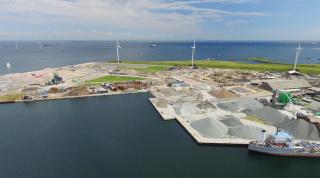
Environmental dredging and sediment management

Environmental dredging and sediment management

Recycling

Our recycling project approach includes a thorough analysis of the customer's needs, a feasibility study, an offer, transport and administration, acceptance analysis, and processing.

We use various techniques such as:

  • Temporary storage, where the delivery of materials is followed by temporary storage before sampling and analysis can be conducted. Sieving is also carried out as part of the testing process. Once the analysis is complete, geotechnical improvement techniques may be applied to the materials. If suitable, the materials may be repurposed as a secondary raw material. This entire process is aimed at ensuring that the materials meet required standards and can be safely and effectively utilized in various applications.
  • Lagooning, a process that involves several steps to convert wastewater into a secondary raw material. The process starts with the delivery of wastewater to a lagoon, which is then dewatered to remove excess water. The remaining sludge is then treated and analysed to identify any toxic contaminants. The sludge is treated and recovered, and the secondary raw material is produced.
  • Biological treatment, a process used to decontaminate soil by introducing nutrients to create favourable conditions for microorganisms to break down pollutants. The contaminated soil goes through homogenization and aeration to facilitate the growth of microorganisms. The process is monitored to ensure optimal conditions are maintained for the microorganisms. After the treatment, the soil is converted into a secondary raw material that can be reused for different purposes.
  • Thermal treatment which involves the delivery of waste materials to a designated location for storage. The waste is analysed before being heated to high temperatures to eliminate any harmful substances, with the subsequent fumes being treated further before being released. Once the thermal treatment is complete, the remaining material is cooled and sent for processing as secondary raw material.
  • Physico-chemical treatment, a process used to treat substances and separate impurities. The input, which is usually contaminated material, goes through a series of steps including washing, hydro cycloning, densimetric separation, magnetic separation, and classifying. At the output, the treated material is separated from the impurities, which are discarded. Especially this type of treatment is at the heart of our recycling activities as it serves well for polluted soils (incl. PFAS contamination) as well as for a wide range of mineral waste streams (such as fines of construction & demolition waste, foundry sand, road sweepings, mineral sewer waste, bottom ashes, …). In this way we produce high quality recycled aggregates which, depending on the envisaged application, can replace virgin aggregates and thus lower the environmental impact of the end-product.

These processes aim to remove contaminants and pollutants from the soil, ensuring that it is safe for use. The recovered materials can be used for other purposes, thus reducing waste and promoting sustainability. Overall, these methods provide effective solutions for soil remediation and environmental protection.

DC Environment continues to innovate and develop new techniques, staying ahead of the curve in the field of environmental sustainability. Our goal is to help our clients reduce waste and contribute to a more sustainable future.

Temporary storage

Temporary storage
Temporary storage
Temporary storage
Temporary storage

Lagooning

Environmental dredging and sediment management
Lagooning
Construction of sealed membranes
Environmental dredging and sediment management

Biological treatment

Biological treatment

Thermal treatment

Thermal treatment

Physico-chemical treatment

Physico-chemical treatment
Recycling